Today my seven-year old was reading an article in New Scientist about diamonds, where it discussed alternatives for harder materials, and arrangements of chemical structures.
It was remarkable that he read for more than two pages on a subject - chemistry - for which he clearly had little to no understanding. Especially since it's only been a few months since he attained sufficient fluidity in reading.
I have already outlined some of the basics of chemistry to my seven- and eight-year-olds, but since they have no specific interest in it, it will be slow going for a while.
But it got me considering the periodic table. I'd only done chemistry to sixth form (age 16), and I haven't refreshed systematically since. So I glanced at the subject in Encyclopedia Britannica - one of their rare shows of colour was the periodic table, page 952 of volume 15.
It was in discussion of the chemical composition of the earth, and the origin of elements in stars, that I realised there was a whole new area of fundamental systematics for me to absorb with adult eyes.
And then I was reminded of a piece in today's Good Weekend: in Stephanie Dowrick's Inner Life column which tends, I guess, to discuss the secular spiritual. (I'm not generally taken by her, preferring the following columnist, Mark Dapin, who is surprisingly readable for a magazine humour column.)
Dowrick was querying one's "eye for beauty". Looked like she was focusing on the visually beauty, but she eventually redeemed herself with other examples: children, poetry, music.
Of course, I find beauty in the analytical, in making sense of things that provide an internal logic and coherency. The more fundamental the better, such as physics, evolutionary biology... and chemistry. To see natural patterns and logic that are inherent and immutable: they describe a natural rhythm, a joyous music of the universe that is unsullied by human hand.
It takes a particular temperament to find joy in that sort of beauty*. I feel privileged.
*One who does is someone I've previously mentioned, Daniel Tammet, a savant with Asperger's, who finds beauty in numbers. That's numbers for themselves, as opposed to beauty in more complex mathematics, for which I have given a wonderful example here.
Showing posts with label mathematics. Show all posts
Showing posts with label mathematics. Show all posts
Saturday, September 05, 2009


Thursday, August 27, 2009
SETI, Open source, and the socialisation of productivity
What does SETI have to do with Microsoft's furrowed brow?
We all know the Search for Extra-Terrestrial Intelligence, whereby the universe is scanned for signals throughout the electromagnetic spectrum which can be interpreted as originating with intelligent life. Some of us have run SETI@home: you download a screensaver, which runs in the background, borrowing your unused computer time to run a parcel of number crunching for SETI. Everybody wins: only your idle computer time is used, and it can have some wider community benefit - you may even be responsible for the first discovery of extraterrestrial life.
That was the first distributed grid computing project to gain widespread publicity. But the software is now available to turn any general project requiring major computer time into a socialised project. The Herald recently ran an article on Australian use of such software: specifically, BOINC, The Berkeley Open Infrastructure for Network Computing. The article said over 32,000 Australians were currently running BOINC projects, out of 1.7 million people worldwide.
The scope is tremendous, not just for general scientific research, but also for any community-sector project that may not otherwise have the resources to get off the ground.
For the moment, here's a list of projects you may wish to take part in. Those are all scientific research, mainly in biology, physics and maths, but there's also a World Community Grid, which is specifically aimed at humanitarian projects.
As for Microsoft, the other side of community computing is software: open source, to be specific: generally an open source project is contributed to by many, with no profit-oriented copyright - and generally available for free. Open Office may be the most famous - a direct competitors to Microsoft's Office suite. And as a method of developing software that is freely available to all, it has gained acceptance in most areas of my professional focus, business intelligence. Apart from the well-known mySQL database, there are also open source tools available for most related areas. As well as database and BI software, there's also ETL, data profiling, and so on.
Over time, you should expect prices to tumble in all types of software directly affected by open source initiatives. Yes, the likes of Microsoft can expect some buffering from these forces due to brand-name strength. But yes too, Microsoft is worried enough that they are already working on alternative revenue streams, including jumping into the cloud. Those alternatives shouldn't see a collapse of capitalism any time soon, but the long-term trend can only benefit the public, particularly those who might not otherwise be able to afford such computer resources, particularly in the developing world.
In a wider sense, distributed computing and open source are simply harbingers of a globalisation and socialisation of productivity, for the benefit of all.
We all know the Search for Extra-Terrestrial Intelligence, whereby the universe is scanned for signals throughout the electromagnetic spectrum which can be interpreted as originating with intelligent life. Some of us have run SETI@home: you download a screensaver, which runs in the background, borrowing your unused computer time to run a parcel of number crunching for SETI. Everybody wins: only your idle computer time is used, and it can have some wider community benefit - you may even be responsible for the first discovery of extraterrestrial life.
That was the first distributed grid computing project to gain widespread publicity. But the software is now available to turn any general project requiring major computer time into a socialised project. The Herald recently ran an article on Australian use of such software: specifically, BOINC, The Berkeley Open Infrastructure for Network Computing. The article said over 32,000 Australians were currently running BOINC projects, out of 1.7 million people worldwide.
The scope is tremendous, not just for general scientific research, but also for any community-sector project that may not otherwise have the resources to get off the ground.
For the moment, here's a list of projects you may wish to take part in. Those are all scientific research, mainly in biology, physics and maths, but there's also a World Community Grid, which is specifically aimed at humanitarian projects.
As for Microsoft, the other side of community computing is software: open source, to be specific: generally an open source project is contributed to by many, with no profit-oriented copyright - and generally available for free. Open Office may be the most famous - a direct competitors to Microsoft's Office suite. And as a method of developing software that is freely available to all, it has gained acceptance in most areas of my professional focus, business intelligence. Apart from the well-known mySQL database, there are also open source tools available for most related areas. As well as database and BI software, there's also ETL, data profiling, and so on.
Over time, you should expect prices to tumble in all types of software directly affected by open source initiatives. Yes, the likes of Microsoft can expect some buffering from these forces due to brand-name strength. But yes too, Microsoft is worried enough that they are already working on alternative revenue streams, including jumping into the cloud. Those alternatives shouldn't see a collapse of capitalism any time soon, but the long-term trend can only benefit the public, particularly those who might not otherwise be able to afford such computer resources, particularly in the developing world.
In a wider sense, distributed computing and open source are simply harbingers of a globalisation and socialisation of productivity, for the benefit of all.
Monday, January 26, 2009
Practical astronomy lessons
I was never interested in astronomy: those patterns of stars never made any sense to me. But recently I spoke to an astronomer, and he helped put a lot of pieces together for me.
Stephen works for the Anglo Australian Telescope, a joint venture between those two governments (although it looks like the English are planning to pull out).
The telescope itself is situated near Coonabarabran, in the west of New South Wales; however Stephen is located in Sydney, sending requests out west, receiving data back, and sometimes travelling out to be there in person. In stark contrast to me, he had always loved astronomy, has a PhD, and seems to be working where he wants to be. he painted several dichotomies which helped me understand the discipline. He was really on top of his subject, so any error here is due to my effort in understanding.
One of those dichotomies is between the practical and the theoretical astronomer. The practical astronomer will do all the practical work in aligning the telescope, identifying the items of interest, and taking the images. The work is then handed over to a theoretical astronomer, who tries to work out what it all means. If anything, I would be that theoretician; the practical side would scare me, but the maths and physics would fascinate.
He also clarified for me the difference between optical and radio telescopes. Although I should have had an inkling, I never did join the dots: there is quite a distinction between the two. The first, of course, scans space for what can be seen in visible light, using what we traditionally understand a telescope to be, lenses and all. But a radio telescope picks up radiation in the spectrum beyond ultraviolet light, thus needing non-optical radio receivers to pick up data from space. They're both picking up information from the EM spectrum, but representing and analysing it differently. Radio telescopes can be as in the film The Dish, which has an enormous parabolic dish that concentrates signals to a point which records them.
 This is the Parkes observatory (again in western New South Wales), which is part of the CSIRO (Australia's scientific research organisation) whereas the AAT is not part of the CSIRO at all.
Radio telescopes can also be set up in an array of smaller ones, as in the film Contact - in fact, there is a site in Western Australia that is in the running for global funding to develop an array of dishes that would be one of the largest in the world, running to an area of square kilometres.
Stephen said that, in a very broad sense, optical telescopes took images that represent a (relatively) static view of the universe - as it was at a single point in time (so to speak - the light from distant objects, of course, would date back further in time than that from closer objects). In contrast, radio telescopes recorded data from events - a more dynamic picture being built up of suns flaring, galaxies colliding, black holes, gas clouds, etc. My guess is that images we see that are built from radio telescopes are colour coded to depict the intended narrative that is not otherwise representable visually, whereas optical images may at times be enhanced to also provide clarity to the narrative. Unfortunately, this means some people would be misled into thinking that at a macro level, the universe is more colourful than it really is.
Stephen told me much more about the subject than I have reproduced here, and I am very grateful to him for helping me fill so many gaps in my understanding.
Coincidentally, my family (without me) passed by Parkes a couple of weeks after our conversation, which is why I have this magnificent picture. The dish is 64m in diameter, covers 3216 square metres, and weighs 300 tonnes. Operating frequencies range from 440 MHz to 23 GHz.
Stephen works for the Anglo Australian Telescope, a joint venture between those two governments (although it looks like the English are planning to pull out).
The telescope itself is situated near Coonabarabran, in the west of New South Wales; however Stephen is located in Sydney, sending requests out west, receiving data back, and sometimes travelling out to be there in person. In stark contrast to me, he had always loved astronomy, has a PhD, and seems to be working where he wants to be. he painted several dichotomies which helped me understand the discipline. He was really on top of his subject, so any error here is due to my effort in understanding.
One of those dichotomies is between the practical and the theoretical astronomer. The practical astronomer will do all the practical work in aligning the telescope, identifying the items of interest, and taking the images. The work is then handed over to a theoretical astronomer, who tries to work out what it all means. If anything, I would be that theoretician; the practical side would scare me, but the maths and physics would fascinate.
He also clarified for me the difference between optical and radio telescopes. Although I should have had an inkling, I never did join the dots: there is quite a distinction between the two. The first, of course, scans space for what can be seen in visible light, using what we traditionally understand a telescope to be, lenses and all. But a radio telescope picks up radiation in the spectrum beyond ultraviolet light, thus needing non-optical radio receivers to pick up data from space. They're both picking up information from the EM spectrum, but representing and analysing it differently. Radio telescopes can be as in the film The Dish, which has an enormous parabolic dish that concentrates signals to a point which records them.
 This is the Parkes observatory (again in western New South Wales), which is part of the CSIRO (Australia's scientific research organisation) whereas the AAT is not part of the CSIRO at all.
Radio telescopes can also be set up in an array of smaller ones, as in the film Contact - in fact, there is a site in Western Australia that is in the running for global funding to develop an array of dishes that would be one of the largest in the world, running to an area of square kilometres.
Stephen said that, in a very broad sense, optical telescopes took images that represent a (relatively) static view of the universe - as it was at a single point in time (so to speak - the light from distant objects, of course, would date back further in time than that from closer objects). In contrast, radio telescopes recorded data from events - a more dynamic picture being built up of suns flaring, galaxies colliding, black holes, gas clouds, etc. My guess is that images we see that are built from radio telescopes are colour coded to depict the intended narrative that is not otherwise representable visually, whereas optical images may at times be enhanced to also provide clarity to the narrative. Unfortunately, this means some people would be misled into thinking that at a macro level, the universe is more colourful than it really is.
Stephen told me much more about the subject than I have reproduced here, and I am very grateful to him for helping me fill so many gaps in my understanding.
Coincidentally, my family (without me) passed by Parkes a couple of weeks after our conversation, which is why I have this magnificent picture. The dish is 64m in diameter, covers 3216 square metres, and weighs 300 tonnes. Operating frequencies range from 440 MHz to 23 GHz.
Saturday, September 30, 2006
Tech: The beauty in Mathematics
Mathematics certainly is beautiful. But I do understand that it’s a struggle for a lot of people. It’s hard to communicate that beauty to someone for whom maths is simply a source of frustration, so I don’t expect universal agreement on this.
I stumbled across a Wikipedia article called Mathematical Beauty. Rather an unusual encyclopaedia entry, but in many ways ideal: to have a subject presented from an enthusiast’s viewpoint should be the starting point for any subject. Read the quotes at the beginning of the article: good perspective from some famous aficionadoes.
I studied pure mathematics as an undergraduate major, and it was greatly enjoyable. It’s a puzzle enthusiast’s joy for the solution, or the reader’s joy in elegant prose, a well-constructed plot, or a moving journey. Except that in this case, you’re seeing beauty in a ruthless, immutable truth.
The discussion of various types of beauty in maths is something that strikes a chord with me. Beauty in method is what mathematicians typically refer to as elegance; this is my most common experience of beauty. But I particularly appreciate a line of thought that draws in two seemingly unrelated strands of thought – beauty in results. Calculus is good for this. And the recently-created proof of Fermat’s Last (unsolved) Theorem – which took several years of the solver’s life – is a good illustration of the value – and capability, and necessity – of drawing in different branches of thought.
But I particularly love Euler’s Identity – which is about the most beautiful formula I’ve ever seen, for its elegance, simplicity, and deepness: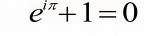
- three of the most basic constants for the price of one, all tied back to the identity.
A reminder: e is the base of the natural logarithm (ln), i is an imaginary unit on the complex number plane (the square root of -1), and pi is, well, pi (ratio of a circle's circumference to diameter). Its journey describles the semi-circumference of a unit circle from 1 to -1.
An appreciation of mathematics is the root of all science.
I stumbled across a Wikipedia article called Mathematical Beauty. Rather an unusual encyclopaedia entry, but in many ways ideal: to have a subject presented from an enthusiast’s viewpoint should be the starting point for any subject. Read the quotes at the beginning of the article: good perspective from some famous aficionadoes.
I studied pure mathematics as an undergraduate major, and it was greatly enjoyable. It’s a puzzle enthusiast’s joy for the solution, or the reader’s joy in elegant prose, a well-constructed plot, or a moving journey. Except that in this case, you’re seeing beauty in a ruthless, immutable truth.
The discussion of various types of beauty in maths is something that strikes a chord with me. Beauty in method is what mathematicians typically refer to as elegance; this is my most common experience of beauty. But I particularly appreciate a line of thought that draws in two seemingly unrelated strands of thought – beauty in results. Calculus is good for this. And the recently-created proof of Fermat’s Last (unsolved) Theorem – which took several years of the solver’s life – is a good illustration of the value – and capability, and necessity – of drawing in different branches of thought.
But I particularly love Euler’s Identity – which is about the most beautiful formula I’ve ever seen, for its elegance, simplicity, and deepness:
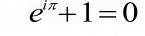
A reminder: e is the base of the natural logarithm (ln), i is an imaginary unit on the complex number plane (the square root of -1), and pi is, well, pi (ratio of a circle's circumference to diameter). Its journey describles the semi-circumference of a unit circle from 1 to -1.
An appreciation of mathematics is the root of all science.
Thursday, August 31, 2006
Tech: The tech personality 2: three mathematicians
I was struck by the profiles of three people who have a mathematical aptitude of one sort or another.
For some people, mathematics takes work. For some, it comes easy. For others, it's an art form.
Australian Terence Tao is the youngest ever winner of the Fields medal, the "Nobel of maths". His mathematical interests are wide-ranging, and he appears particularly well-adjusted.
Russian Grigory Perelman was also awarded a Fields. He declined it because they didn't understand his work - a mite unfair, because you don't need to understand some maths in full to appreciate its truth, beauty and relevance. The Fields was awarded to him anyway. He has apparently solved a very important puzzle - which will probably fetch him the million-dollar millenium prize. He apparently withdrew from mathematics in protest against a perceived lack of ethics in certain people in the upper echelons of maths. Currently unemployed.
Englishman Daniel Tammet has Asperger's Syndrome and, unusually, some insight into his condition. He also has an eidetic memory. He can recite pi to 22,000 places - "as beautiful as the Mona Lisa". He can multiply numbers in his head very easily - as does Tao - but interestingly, he can't do square roots (as some can), and can't do abstractions such as polynomials.
Three very different personalities. All very interesting. I can appreciate them from my love of mathematics, although they're leagues above me.
Here are their Wikipedia entries: Tao , Tammet, and Perelman.
And here's some interesting press about them: Tao, Tammet, and Perelman.
All six articles are worth a read.
For some people, mathematics takes work. For some, it comes easy. For others, it's an art form.
Australian Terence Tao is the youngest ever winner of the Fields medal, the "Nobel of maths". His mathematical interests are wide-ranging, and he appears particularly well-adjusted.
Russian Grigory Perelman was also awarded a Fields. He declined it because they didn't understand his work - a mite unfair, because you don't need to understand some maths in full to appreciate its truth, beauty and relevance. The Fields was awarded to him anyway. He has apparently solved a very important puzzle - which will probably fetch him the million-dollar millenium prize. He apparently withdrew from mathematics in protest against a perceived lack of ethics in certain people in the upper echelons of maths. Currently unemployed.
Englishman Daniel Tammet has Asperger's Syndrome and, unusually, some insight into his condition. He also has an eidetic memory. He can recite pi to 22,000 places - "as beautiful as the Mona Lisa". He can multiply numbers in his head very easily - as does Tao - but interestingly, he can't do square roots (as some can), and can't do abstractions such as polynomials.
Three very different personalities. All very interesting. I can appreciate them from my love of mathematics, although they're leagues above me.
Here are their Wikipedia entries: Tao , Tammet, and Perelman.
And here's some interesting press about them: Tao, Tammet, and Perelman.
All six articles are worth a read.
Subscribe to:
Posts (Atom)